
How to Search Criminal Dockets
Court level comes first. A misdemeanor, or the first filing of a felony complaint, usually sits with Portsmouth Municipal Court serving Scioto County. Once a felony moves forward, the Scioto County Court of Common Pleas criminal docket lives with the Clerk of Courts Legal Division. Check the court named on whatever paper started the case. That could be a citation, complaint, summons, or bond paper. Scioto County CaseLook and Scioto County CourtView help you find things fast. The responsible clerk still holds the verified current record. So treat any portal hit as a lead, not the last word.
- For a Portsmouth Municipal matter, open the Scioto County CaseLook notice, accept it, and use the search form with the most reliable available identifier.
- For a Scioto County Court of Common Pleas felony, start at Scioto County CourtView eAccess, complete the public verification step, and continue to public search.
- Match any result to the Scioto County court and case number. A municipal felony complaint can be followed later by a separate Scioto County Court of Common Pleas case after bindover.
- If a current setting or a missing record matters, contact the appropriate clerk. Scioto County CaseLook permits a written request or visit; Scioto County CourtView’s clerk gateway directs timely verification to the Scioto County Legal Division.
Note: Both local online channels warn that new activity may take at least 24 hours, or longer, to appear. Plan around the lag when checking recent filings.
Scioto County Criminal Docket Portal Split
Scioto County runs two separate portals. Portsmouth Municipal Court serving Scioto County puts its records on Scioto County CaseLook. The Scioto County Court of Common Pleas Clerk uses Scioto County CourtView eAccess for public computerized records. One system will not answer for the other. CaseLook opens with a disclaimer. CourtView's public landing screen asks you to pass an "I'm not a Robot" check before searching. A blank search form tells you which controls exist, not every field a docket holds or everything available remotely.
Before searching the Court of Common Pleas side, the Clerk's Online Records page is worth a stop. It explains that posting can take 24 hours or substantially longer after a filing or judicial action. It also points to the Scioto County Legal Division for confirmation. On the municipal side, the CaseLook notice tells anyone needing verified information to send a request. A visit during normal business hours works too.
What a Criminal Docket Shows
Think of a Scioto criminal docket as a chronological register rather than a substitute for a certified judgment. Ohio pairs dockets with appearance, trial, journal, and execution records that relate to the same case. Column labels, document links, charge blocks, and codes vary by system, so read what your result actually shows instead of assuming a fixed layout.
| Court and identifier | Use the Scioto County court, division, and assigned case or citation number together. A municipal traffic payment example can include a suffix such as TRD...A, but it is not a universal Scioto case-number format. |
|---|---|
| Case heading | The caption and role labels appear where the public system displays them; exact labels were not verified on the gated screens. |
| Dated activity | Local sources support careful references to a complaint or indictment, motion, notice or order, hearing, continuance, judgment, sentencing, transfer, or appeal. |
| Setting information | A docket may point to date and action information, but the Scioto County clerk remains the local confirmation source for a live setting. |
| Outcome and documents | An entry can reflect a disposition, yet a filed order or clerk-certified copy is a separate record and may be restricted or redacted. |
Scioto County Criminal Docket After Felony Bindover
A felony complaint often starts in Portsmouth Municipal Court serving Scioto County. That court holds a probable-cause hearing. If the judge finds probable cause, the case moves to the Scioto County Court of Common Pleas for final disposition. That handoff is why one search can turn up an early municipal entry and still miss the rest. Neither record alone tells the whole story.
The Portsmouth Municipal Court serving Scioto County Criminal Division spells out its misdemeanor jurisdiction and its preliminary felony role. The Scioto County Court of Common Pleas Clerk's Legal Division lists Criminal among its permanent dockets. Follow the venue stated in the current notice rather than assuming a felony stays at the municipal level.
The official Portsmouth Municipal Court Criminal Division page shows the jurisdiction split. That split shapes any Scioto County criminal docket search.
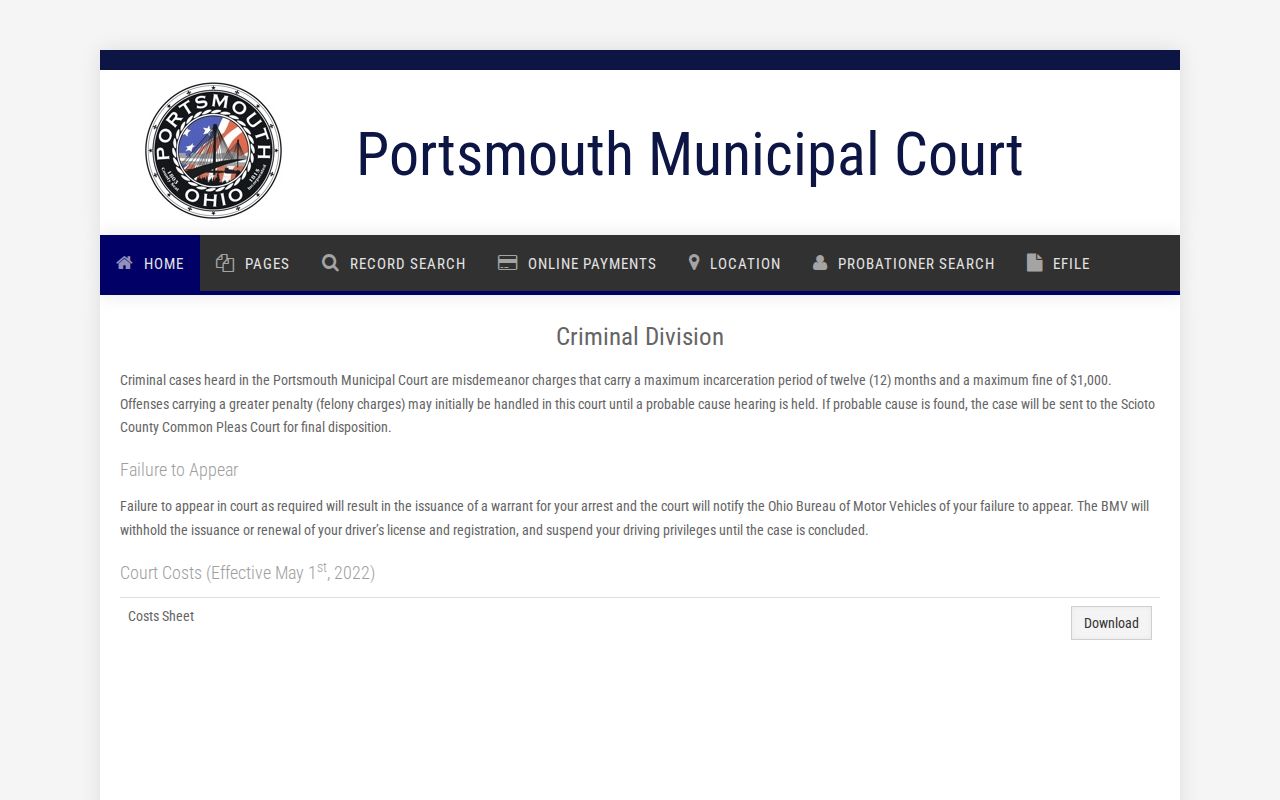
That preliminary-hearing role is the whole reason a felony search may need a second pass. Check with the Scioto County Court of Common Pleas clerk for anything after bindover.
Stages on a Criminal Docket
Read a Scioto criminal docket in date order. Each entry marks one step in a process, not a verdict. A case opens with a complaint. Or it opens with an indictment when the Scioto County Court of Common Pleas handles the felony. Expect early entries for an initial appearance or arraignment, bond conditions, a pretrial, a motion hearing, and a probable-cause hearing in municipal matters. Later entries cover a plea or trial, disposition, sentencing, and any appeal-related work.
Docket flow: Filing → Arraignment → Pretrial → Plea or Trial → Disposition → Sentencing
An older date is not always the current setting. Find the latest notice, order, or continuance, and verify any time-sensitive court date with the Scioto County clerk.
Scioto County Criminal Docket Delay Checks
A missing same-day entry does not mean nothing happened. The Scioto County Court of Common Pleas Clerk says online records can lag by at least 24 hours. Sometimes the lag runs substantially longer after a filing or judicial action. CaseLook carries the same at-least-24-hour warning. Search once with the right court and identifier. Then go to the keeper of the record when a setting or recent action matters.
For Court of Common Pleas records, call the Scioto County Legal Division at (740) 355-8218. You can also view the file in Room 205 at the Scioto County Courthouse. For municipal records, use the Municipal Court clerk at (740) 354-3283, send a written request, or visit 728 Second Street. A portal result is a pointer, not a real-time promise.
Which Court Holds Criminal Dockets
Two courts split the criminal work in Scioto County. Portsmouth Municipal Court handles traffic violations and misdemeanors countywide. Its Criminal Division lists a maximum of twelve months of incarceration and a $1,000 fine for misdemeanor charges. Felony complaints also start there, at the probable-cause stage. From that point the case moves to the Scioto County Court of Common Pleas General Division for final felony proceedings. The Clerk's Scioto County Legal Division keeps that docket.
Juvenile records take a different route. That channel runs through Room 201 under a separate access rule. Ohio's highest court is a different matter. The Supreme Court of Ohio Public Docket applies only when a case actually reaches that court. It cannot replace a Scioto County trial-court docket search. Appeals go to the Fourth District Court of Appeals. Its docket remains fully separate from the Scioto trial-court record.
Scioto County Criminal Docket Terms
A few abbreviations on a Scioto County criminal docket are confirmed. Portsmouth's public material ties TRC to driving under the influence. It ties TRD to other traffic offenses. Scioto County CaseLook also lists the criminal categories CRA and CRB without explaining them. Treat those two as labels, not definitions.
- Probable-cause hearing
- A Municipal Court proceeding that can determine whether a felony complaint is bound over to the Scioto County Court of Common Pleas process.
- Bindover
- The transfer of a qualifying felony matter from Municipal Court after the probable-cause stage.
- Arraignment
- An early proceeding that addresses the charge and plea, not a final outcome.
- Continuance or reset
- A move of a scheduled event; a later docket entry or clerk confirmation controls over an earlier date.
- Disposition
- The action resolving a charge or case, which can differ from the text of a certified judgment entry.
Scioto County Criminal Bond Schedule
Bond is often the most urgent question in a criminal case. The schedule will not answer it for one case. Portsmouth's published bond schedule lists amounts by offense or category, not by defendant. So treat it as general guidance. Do not assume Scioto County CaseLook or Scioto County CourtView shows every bond amount, payment, or condition. Read the docket entry closely. For a specific document, ask the clerk. The Portsmouth Municipal Court serving Scioto County bond schedule is the official public schedule, not proof of what any individual Scioto County criminal docket contains.
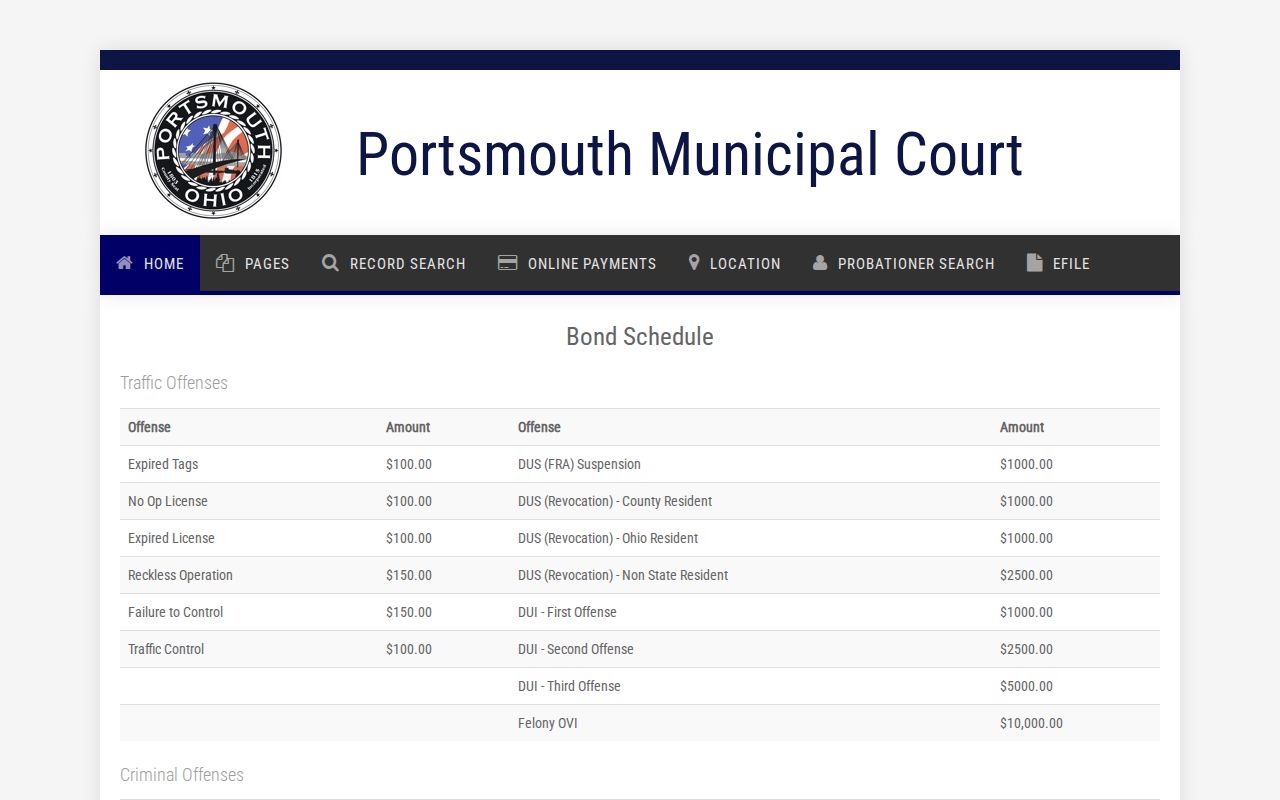
Think of it as background. The schedule gives Scioto County category context, while the case docket and the clerk file remain the true record sources.
Scioto County Criminal Juvenile Access
Juvenile records are not part of the ordinary public criminal docket search. Scioto's local juvenile rules draw a tight circle. A parent, next of kin, or counsel may get access, and anyone else needs a judge order or lawful process. Ohio law also requires a separate juvenile-traffic docket. Separate does not mean public online. Adult cases kept by the Juvenile Division are different, and those are treated as public records. A missing result has many possible causes: the wrong court, a coverage gap, a posting delay, or a restriction. It never proves a case does not exist.
Scioto County Criminal Appeals Docket
An appeal of a Scioto County criminal case leaves the trial court behind. It lands in the Fourth District Court of Appeals. That court opens its own file separate from the trial-court docket. A case that climbs higher still gets tracked on the Supreme Court of Ohio's Public Docket. Be clear about what these are not. Neither court offers a statewide sweep of Ohio county trial records.
Federal appeals travel a different road entirely. The Sixth Circuit Court of Appeals handles that route. It sits outside the normal state appeal path a Scioto criminal docket follows.
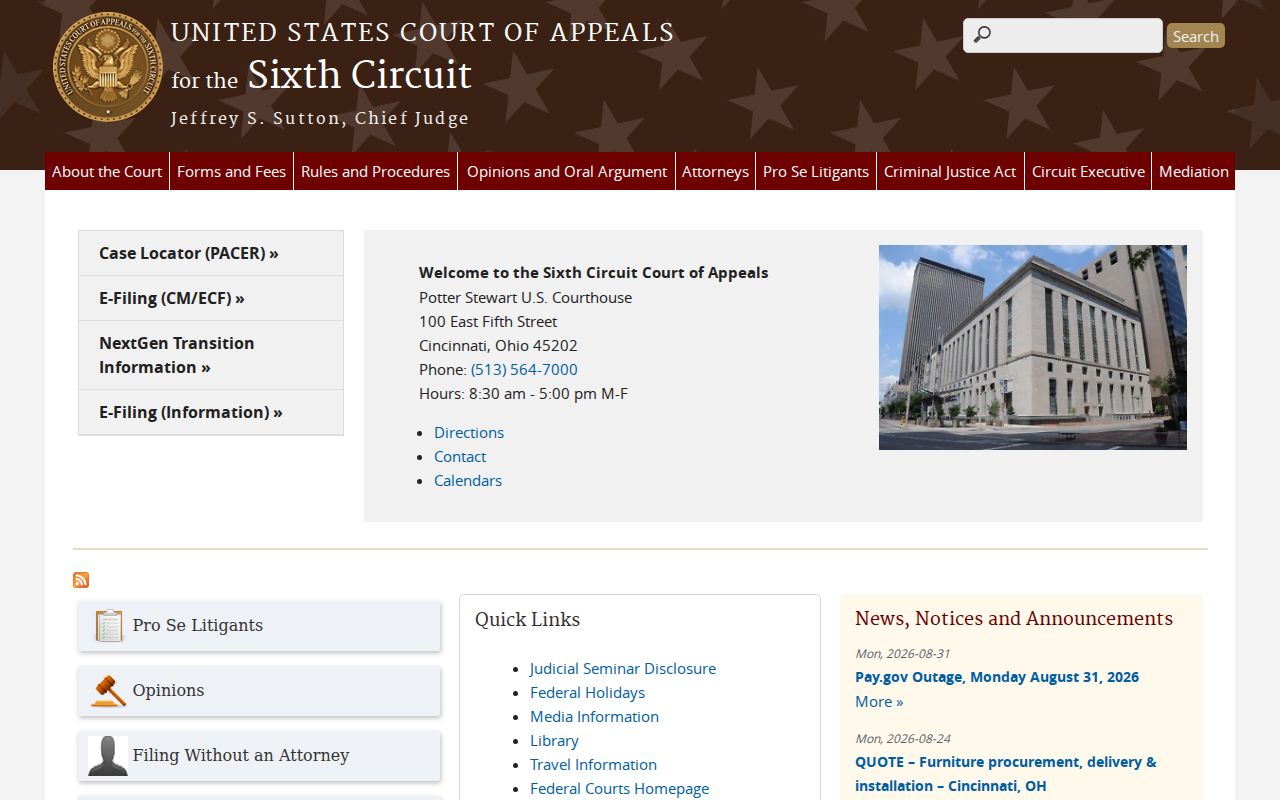
This court is federal, outside the Scioto County state system.
Public Access and Sealed Criminal Dockets
Ohio court rules presume openness for court records. That presumption bends in practice. Personal identifiers and other protected material can be redacted or restricted from a public docket. A sealed or expunged adult record can vanish from ordinary public search. A missing online result should prompt a venue and access check, not an assumption about a person or a case.
Key Rules:
Ohio Revised Code §2303.12 requires the Scioto County Court of Common Pleas Clerk to keep docket, journal, and case-file records and provides online criminal access subject to exclusions.
Ohio Revised Code §2953.32 governs adult sealing and expungement applications in the sentencing court when statutory conditions are met.
Ohio Revised Code §2152.71 requires juvenile docket maintenance while local access rules still limit ordinary public inspection.
Scioto County Criminal Judgment Copy Route
Finding the case is only step one. Next, tell the Scioto County clerk who holds it exactly which record you need, whether a docket, an order, a judgment entry, a plain copy, or a certified copy. The online entry will not stand in for the final certified judgment. The Scioto County Court of Common Pleas posts no flat certified-copy fee, mailing method, or request form, so the Legal Division quotes the current amount and process for each request.
Municipal Court records work differently. You can reach them through Scioto County CaseLook, a written request, or a trip to the municipal clerk. If you still need to find the case first, the county's Case Search page lays out the court-by-court search split.
One page deserves a look before you dig in. The Scioto County CaseLook disclaimer displays the municipal public-record notice shown ahead of its search path.
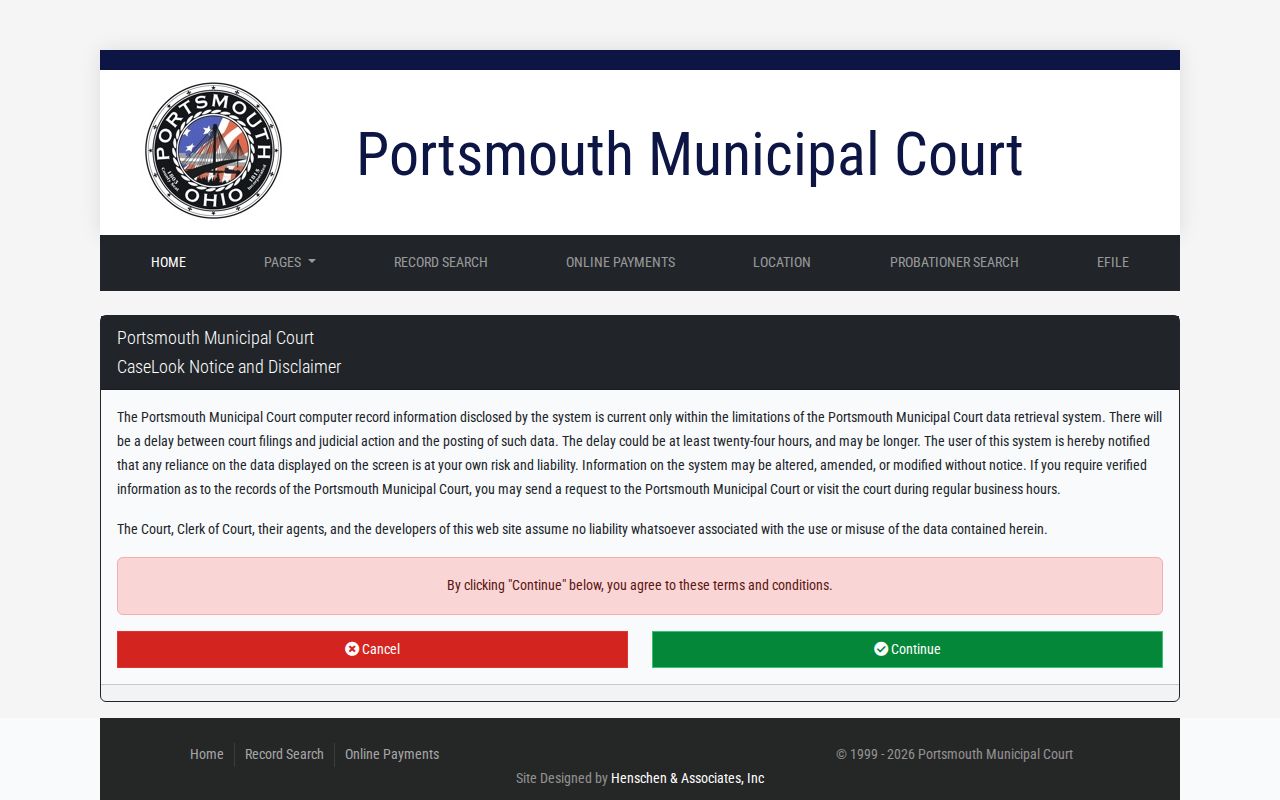
That notice is doing real work. It confirms that a request or a clerk visit is the way to verify a municipal record.